
An emergency tarp service will look a little different depending on the length of time the tarp will be needed. Regardless of how long the tarp will be up, it’s important to clear the roof area before laying down the tarp. For a quick job, the tarp will be draped over the damaged area and secured with lumber or bricks. You can also fasten each grommet down with a 2 inch screw and 11/2 inch washer.
If the tarp needs to be in place for a longer period of time, say for a few months, then a piece of plywood will also be used along with the tarp. Typically, the damaged area should be covered with a ⅝-inch exterior grade piece of plywood and secured with 2-inch deck screws. The plywood helps stop water from collecting on the tarp.
No matter how long your tarp will be up, be sure to have at least a few feet of the tarp going over the roof peak. This ensures that water will run off the tarp instead of going underneath. If you have a tile roof and can’t screw the tarp in, you can fasten the edges of the tarp to the roof eaves.
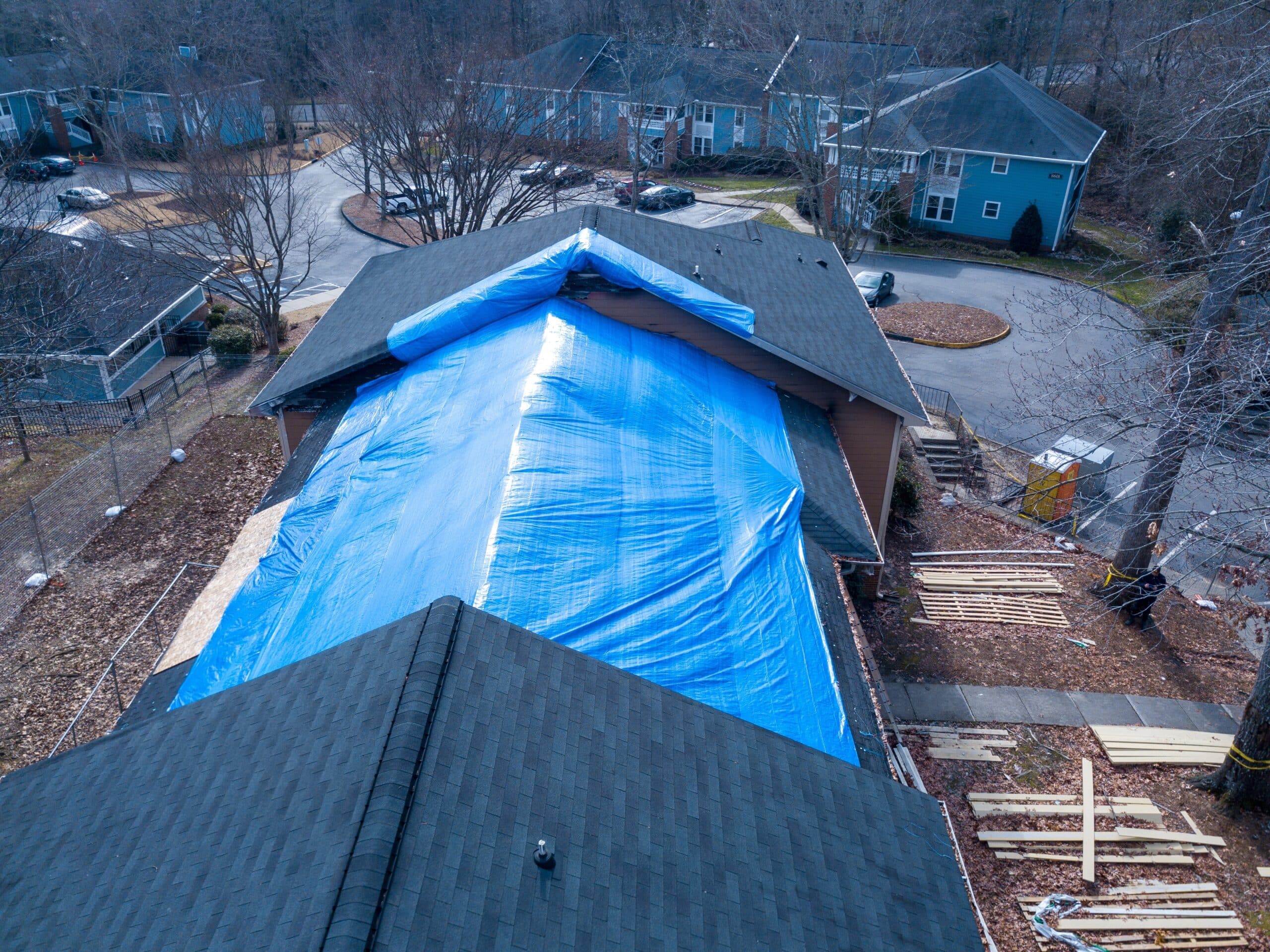
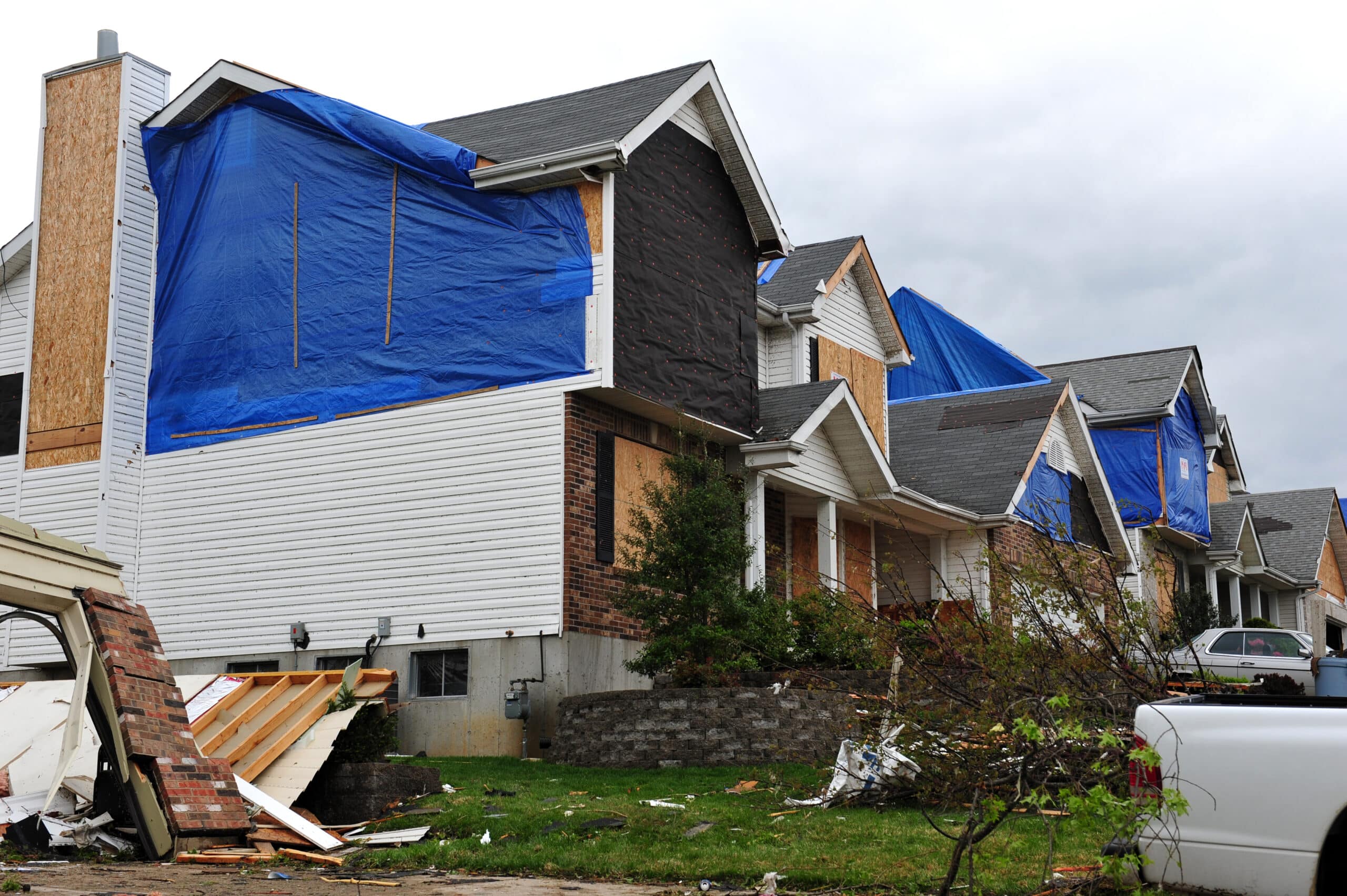
An emergency tarp will need to be large enough to extend beyond the damage, or you’ll need to acquire several to make sure everything is covered. This will help avoid further water damage. You can adhere it to the siding either using hurricane tape or nails. The thicker your tarp, the better it will protect your home. You may also want to get a tarp with UV protection. This will help the tarp last longer. While you’re waiting for repairs, this tarp is the only thing between you and the elements. Make sure you get one that is up to the task.




The cost of emergency tarping varies based on the extent of the damage and the materials required. Storm Guard provides a free, no-obligation estimate after assessing the situation. This way, you’ll have a clear understanding of what’s involved and the pricing upfront.
Storm Guard prioritizes rapid response times. Teams are on standby 24/7, ready to deploy promptly to mitigate further damage to your property. Response times may vary based on location and current service demands.
Storm Guard specializes in emergency tarping for residential and commercial properties. Whether it's a home or a business, our team is equipped to handle tarping needs efficiently.
Signs that indicate the need for emergency tarping include visible damage such as missing shingles, holes, or exposed areas on the roof or siding. If you notice leaks inside your home or water stains on ceilings and walls, it's advisable to contact Storm Guard for an assessment
Many homeowners' insurance policies cover the cost of emergency tarping, which helps prevent further damage to the property. It's recommended that you check with your insurance provider to understand the specifics of your coverage.



Unless otherwise noted, each use of "Storm Guard," “us,” “we,” or “our” throughout Stormguardrc.com collectively refers to both the Storm Guard brand and the Storm Guard Franchise System, which is made up almost exclusively of independently owned and operated franchise locations.