
Emergency roof tarping services are only necessary if your roof encounters issues that need repairs. Here is a quick checklist of precautions that you can take:

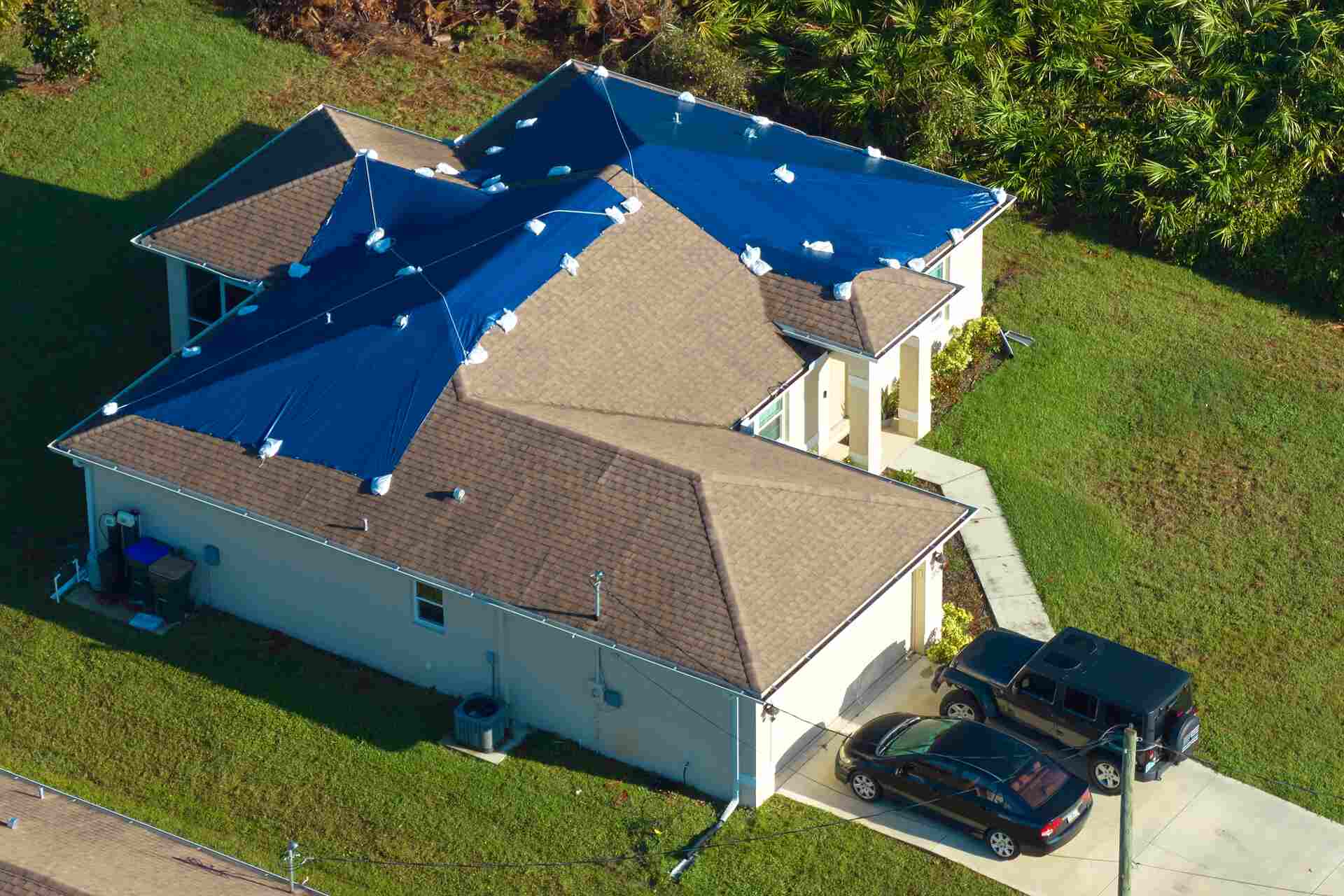
Emergency roof tarping is a temporary solution to help prevent further damage and protect your home. An emergency tarp is especially helpful when avoiding roof leaks, water damage, or mold, and keeping your home insulated as you wait for repairs. A tarp is also a great way to reduce insurance costs, as it keeps the damage to your home to a minimum. While it is easy to put an emergency tarp up on your own, professional roof tarping may be required when the roof damage is significant or a tarp for the whole roof is needed.
An emergency tarp service will look different depending on the time the tarp will be needed. Regardless of how long the tarp will be up, it's essential to clear the roof area before laying down the tarp. The tarp will be draped over the damaged area and secured with lumber or bricks for a quick job. You can also fasten each grommet down with a 2-inch screw and 11/2 inch washer.
If the tarp needs to be in place for a longer period of time, say a few months, a piece of plywood will also be used along with the tarp. Typically, the damaged area should be covered with a 5/8-inch exterior-grade piece of plywood and secured with 2-inch deck screws. The plywood helps stop water from collecting on the tarp.
No matter how long your tarp will be up, have at least a few feet of the tarp going over the roof peak. This ensures that water will run off the tarp instead of going underneath. If you have a tile roof and can't screw the tarp in, you can fasten the edges of the tarp to the roof eaves.




Learn more from our most frequently asked emergency roof tarping questions
On average, an emergency roof tarp costs between $150 and $1,500. However, if the roof damage was caused by severe weather or an unprecedented accident, your insurance company will likely cover the cost.
When installed correctly, an emergency tarp can last up to 90 days. However, leaving it on longer can potentially lead to mold or unnoticed leaks.
The most secure way to keep the tarp on the roof is to use a 2-inch nail. In the short term, heavy objects like lumber or small bricks can also be used. You can also purchase an adhesive roof tarp.
Staples are not recommended as they are not as durable as nails.
The simplest and most common way to temporarily cover a hole in your roof is with a waterproof tarp. If the hole is very small, you can use tar or plastic roofing cement.



Unless otherwise noted, each use of "Storm Guard," “us,” “we,” or “our” throughout Stormguardrc.com collectively refers to both the Storm Guard brand and the Storm Guard Franchise System, which is made up almost exclusively of independently owned and operated franchise locations.