Home / Services / Siding

Siding Services: Installation and Repair

Siding is more than a design choice - it’s your home’s first defense against wind, rain, and temperature changes. The right material can improve energy efficiency, reduce maintenance, and protect your home for decades. At Storm Guard, we help you select siding that fits your climate and property style, then install it with precision for lasting performance.

OUR SIDING SERVICES

Investing in durable siding is one of the best ways to maintain or boost your home's value and avoid expensive repairs. Learn how a Storm Guard residential siding contractor can help keep your siding in tip-top shape, bringing over 20 years of experience for long-lasting results. 

Siding Repair

Siding Repair

Keep an eye out for signs of poorly installed siding. The most common types of siding damage you see are mold, water damage, warping, rot, dents, leaks, cracks, and holes. If you notice any visible damage, siding repair may be necessary. Storm Guard’s experienced technicians quickly assess and conduct fixes, which may include addressing structural issues or simply applying a new coat of paint or stain. These help prevent further damage while improving your home’s curb appeal. Our siding company specializes in diagnosing siding issues and providing lasting solutions with expert craftsmanship.

Siding Installation

Siding Installation

Is the damage too extensive for minor repairs? Installing new siding might offer a better solution. It not only fixes existing issues but also provides a long-lasting, complete upgrade. Installation involves tasks that often require expertise. Storm Guard’s contractors are highly skilled in installing top-grade siding materials such as vinyl, metal, aluminum, and wood. Moreover, they understand your local weather and architectural needs, ensuring durable professional siding solutions backed by warranties that reflect our team’s confidence in quality work.

Siding Damage Assessment

Siding Damage Assessment

Damaged siding is not only an eyesore but can also risk and make your home harder to sell. Request a damage assessment after a major event, such as a storm, especially when you need to file an insurance claim. During our siding company’s damage assessment, a professional will thoroughly inspect your roof, gutters, windows, attic, and ceiling to document damage and estimate costs. These help determine the extent of the damage and clarify the necessary repairs for coverage. Storm Guard can be the liaison between you and your adjuster to ensure all damage is accounted for. 

EMERGENCY SIDING TARP

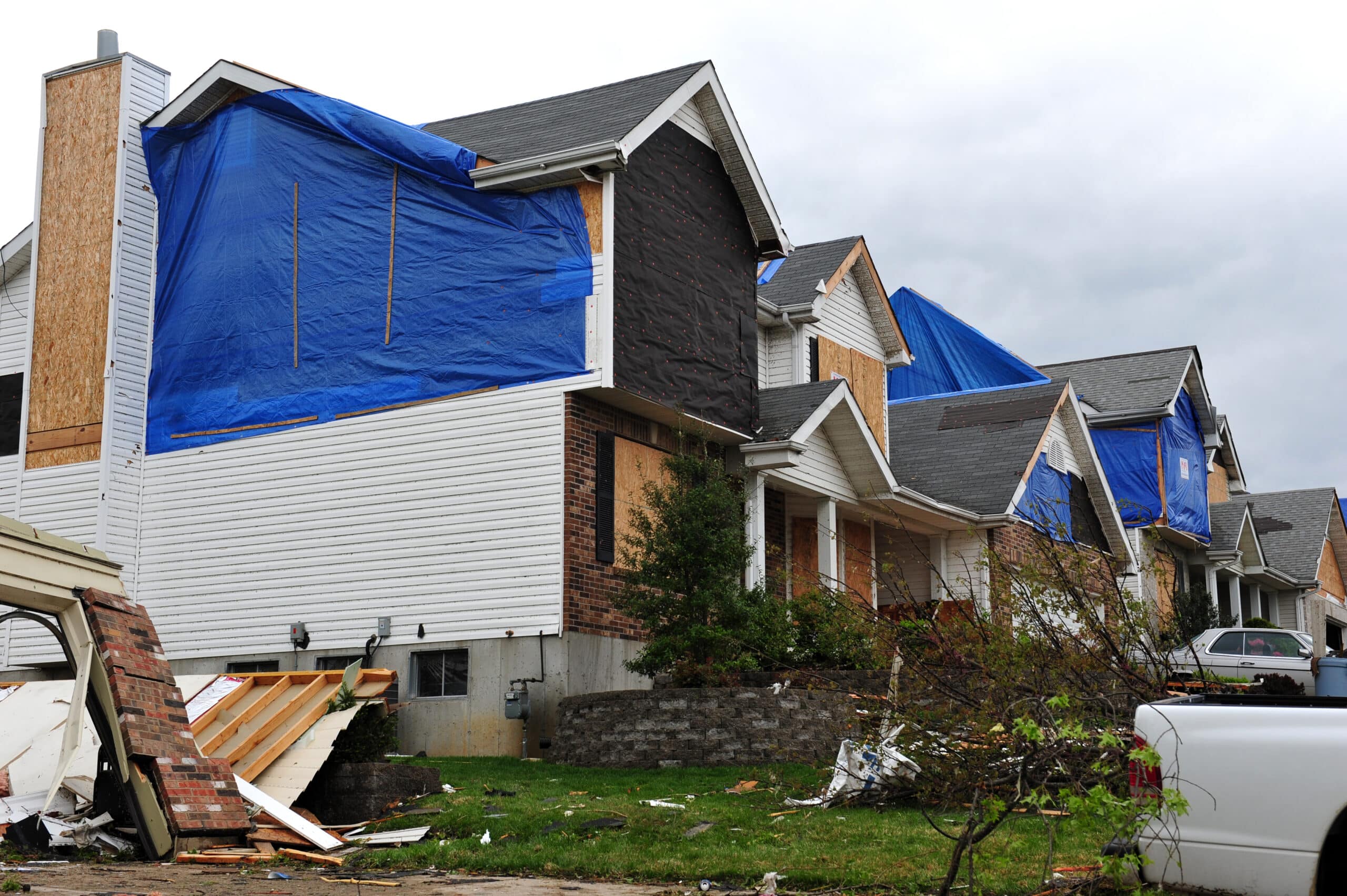
An emergency siding tarp is something you install when you want to avoid further damage but can’t get repairs done right away. It’s usually installed after bad weather conditions or vandalism.

An emergency siding tarp is also often required by homeowner’s insurance companies when you are filing a claim. If you think you need an emergency tarp after a storm or vandalism, odds are that your insurance company will cover the installation. An emergency siding tarp is not a long term solution, but it will help save you money in the long run. You can install an emergency tarp yourself or you can have a professional install it. A professional like Storm Guard can also assess the damage at the same time, making the process more efficient. Learn how to install an emergency siding tarp and what to expect when you hire a professional.
Emergency Siding Tarp

SIDING STYLES & MATERIALS

Siding comes in a wide variety of designs, shapes, and styles. Choosing the one that is best for your property and climate can help ensure that your home or business will have long-lasting curb appeal.

Clapboard Siding

Clapboard Siding
Clapboard siding is the type of siding you’re most likely to see on homes today. This siding is made of long, narrow boards that are installed horizontally across the exterior wall. It comes in a large range of colors and textures as well as insulated and non-insulated styles. Clapboard is a wood plank and typically costs between $5 and $8 per square foot. It is a sustainable product that can last for decades. However, the maintenance is higher since it's wood.

Traditional Lap Siding

Traditional Lap Siding
Traditional lap siding is a subset of clapboard siding. Like clapboard siding, lap siding is also made of wood and nailed horizontally across the wall. The main difference between the two is that clapboard tends to be flat, with no shadow line showing, while lap siding will project a bit further out. The siding is layered one over the other starting from the top. Traditional lap siding is sustainable and has a long life. However, it has a higher maintenance need.

Dutch Lap Siding

Dutch Lap Siding
Dutch Lap siding is another one of the most popular home siding styles. It also has long horizontal planks. However, instead of being laid one over the other they have shallow valleys between each board. Dutch lap is more expensive because it requires more labor to install, so it’s at the higher end of the average clapboard siding in cost.

Wood Grain Siding

Wood Grain Siding
Wood grain siding is vinyl siding manufactured to look like it has a wood grain. It is very versatile and durable. For example, it can be installed both vertically and horizontally for a wide range of designs. Wood grain vinyl siding will typically last longer than wood siding and has an overall lower maintenance cost. Most vinyl siding will cost between $5 and $12 per square foot to install.

Beaded Seam Siding

Beaded Seam Siding
Beaded seam siding is another horizontal style of siding. This siding has a shadow line on the bottom of each panel. That line adds depth to the siding and makes it look like craftsmen hand cut the planks. It comes in many colors which makes it very versatile. Plus, beaded seam siding comes in vinyl, so it has a low maintenance cost.

Board And Batten Siding

Board And Batten Siding
Board and batten siding is also known as barn siding. It is the widest style of siding and can be installed both vertically and horizontally. When installed vertically, it can make a house or building seem taller. Board and batten siding also comes in a range of different materials, including wood, vinyl, and engineered wood. The type of material you choose will determine the final cost of installation.

Cedar Shake Siding

Cedar Shake Siding
Cedar shakes are made from sawn wood to create a less uniform covering. Cedar shakes add a more textured look and it comes in a variety of colors. Real cedar shakes come in a rich color, but they can go grey over time. You’ll need to add a fresh stain every few years to maintain their appearance, which adds to the maintenance cost. It can also be a bit more expensive, with the average cost of installation ranging between $8 and $13 per square foot.

Traditional Shake Siding

Traditional Shake Siding
Straight edge shingles are similar to cedar shakes except they are more uniform. This style of shake siding comes in multiple materials, which means the maintenance level and cost of installation will vary depending on what type of material is used.

Vinyl Siding

Vinyl Siding
Vinyl siding is one of the most popular options for siding because it is strong, durable, and comes in a wide range of colors and textures. It is also affordable, typically costing between $5 and $12 per square foot to install. Minor scratches don’t show and it is very low maintenance.

Metal Aluminum Siding

Metal Aluminum Siding
Metal or aluminum siding is another popular option for both homes and businesses due to the many benefits it offers. For example, aluminum siding can last up to 35 years without needing replacement, is very low maintenance, and insulates better than vinyl siding. Aluminum siding is also a great choice for properties in humid or coastal climates.

Stone Veneer Siding

Stone Veneer Siding
Stone veneer siding is made from a mixture of cement, sand, and aggregate, and then molded to look like stone. It’s most often used as an accent siding. Because it is a composite and not natural stone, stone veneer siding is typically less expensive and easier to install. It costs an average of $20 to $40 to install, much lower than natural stone although higher in price than other siding types.

Wood Siding

Wood Siding
Wood siding is naturally beautiful, but that designer look does tend to come at a cost. Cedar shake siding, for example, can cost between $8 and $13 per square foot to install. But there are also higher maintenance costs to keep in mind. Wood siding is more susceptible to water and insect damage, making it a poor choice for humid climates. On the other hand, wood siding does have a long life span and it is biodegradable.

Fiber Cement Siding

Fiber Cement Siding
Fiber cement siding is very stable and low maintenance. It’s a mix of wood pulp, clay, cement, and sand, and can be made to look like wood, stucco, or masonry. It’s resistant to changes in temperature and humidity, and is resistant to fire, termites and rot. It also does a great job of insulating homes and buildings, making it one of the best choices for improving energy efficiency.

FREQUENTLY ASKED QUESTIONS

Learn more about our most frequently asked questions

The most popular house siding is clapboard and dutch lap.

Tan or a kind of wheat color will add the most money to your resale value.

Vinyl can last up to 60 years if taken care of but has a warranty of 20-40 years. Stucco siding, on the other hand, will last 50-80 years.

Vinyl is the cheapest type of siding.

Stucco and stone are the most expensive siding.

HASSLE-FREE RESTORATION

EXPERT GUIDANCE. LASTING REPAIRS.

From minor fixes to major renovations, we help you understand the best options for your home and deliver solutions built to last.
© 2025 Storm Guard Franchise Systems LLC. All Rights Reserved.

Unless otherwise noted, each use of "Storm Guard," “us,” “we,” or “our” throughout Stormguardrc.com collectively refers to both the Storm Guard brand and the Storm Guard Franchise System, which is made up almost exclusively of independently owned and operated franchise locations.