Home / Services / Siding / Siding Repair

Siding Repair

Fix your siding before it becomes a huge problem. Storm Guard's team of siding repair experts diagnoses siding issues and provides lasting solutions with expert craftsmanship and professional advice, ensuring your home is protected from outside elements.
Siding Damage Assessment

6 COMMON CAUSES OF SIDING DAMAGE

There are six common causes for siding damage. It’s important to become familiar with each one so you can be on the lookout for them on your own property. This will help you avoid more extensive damage down the road.

  • POOR INSTALLATION

The first cause of siding damage is simply poorly installed siding. Siding, especially vinyl siding, expands and contracts with varying temperatures. If your siding is installed too tightly, it will crack and warp. When siding is installed properly, you should be able to move it about a half inch or so.

  • HEAT

The sun, outdoor grills, and other heat sources commonly damage siding. High heat can melt the siding, warp it, or start a fire. Grills should be placed at least 10 feet away from the side of your property.

  • WATER

Water damage is the most prevalent cause of siding damage. Keep a particular eye out for white, gray, or black spots—these are indicators of mold and need to be addressed immediately.

  • TERMITES

Insect damage is rare, but termites can sometimes be found in wood siding. It’s essential to know the signs of a termite infestation. You can check by pushing a screwdriver tip into your siding. If it is easily inserted, you may have a bug problem.

  • SETTLING

Structural damage also happens when your property shifts. This happens as homes and buildings settle over the years. As settling occurs, your siding can buckle.

  • STORM DAMAGE

Promptly addressing siding issues protects your property's value and prevents costly repairs. Learn how a Storm Guard siding repair contractor can help keep your siding in tip-top shape, bringing over 20 years of experience in siding repair services for long-lasting results.
OUR SIDING REPAIR SERVICES

Promptly addressing siding issues protects your property's value and prevents costly repairs. Learn how a Storm Guard siding repair contractor can help keep your siding in tip-top shape, bringing over 20 years of experience in siding repair services for long-lasting results.

COMMON SIDING REPAIR PROBLEMS & SOLUTIONS

We’ve talked about the causes of damage, but what problems can they cause, and what should be done to fix them? Each type of damage has a recommended fix. You can do these solutions yourself, or you can hire a professional.

Cracked or Missing Caulk

A common problem that can lead to water damage is when siding and flashing are not properly sealed. Cracked or missing caulk allows water to seep in underneath the siding, potentially damaging the structure underneath. Missing or cracked caulk can be easily fixed by replacing the flashing or adding another layer of caulk.

Mold

If you live in a humid climate or your home or building has water damage, your siding may develop mold and moisture damage. These are among the most expensive repairs to make. If you discover mold on your siding, you can try using a water and vinegar solution to remove it. But it’s still important to contact a professional, as mold damage can be extensive and irreversible if left too long.

Fading

Faded siding looks bad and can make your entire home or building look dilapidated. If the siding is faded but otherwise in good condition, a coat of paint may be all you need to fix it. If other problems are present, however, you’ll need to replace the faded panels.

Warping

Warping happens when wooden siding is exposed to moisture. Other causes of warping are extreme temperature fluctuations and insect infestation. There is no real fix for warped, wooden shingles other than replacing the entire siding.

Cracking

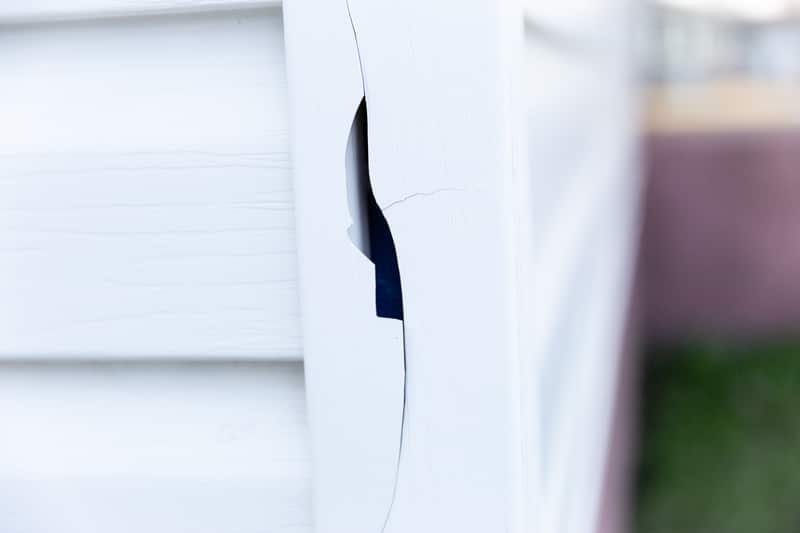
All types of siding can crack under certain conditions, especially during harsh weather or simply as the siding ages over time. As with warping, the fix for cracked siding is simply to replace the damaged section(s).

Damaged Shingles

Shingle damage is another common problem that requires repair. If you have siding shingles, they can become loose or go missing in a storm. The good news is that siding shingles are relatively easy to replace. Just make sure they are nailed on securely.

Dents

Both vinyl and aluminum siding can be prone to dents, especially when hit by hail or debris. Aluminum, in particular, can start to look unsightly if it gets too banged up. Dented aluminum siding will need to be replaced.

Flaking

Stucco siding is a popular choice, especially in the American southwest. It holds up in extreme heat fairly well, so while it is more expensive than other types of siding, it is ideal for hot climates. However, over time stucco will begin to break down, developing flakes, cracks, and loose bindings. Damaged stucco typically requires a professional to repair it and can cost between $8 to $20 per square foot on average.

Dents

Both vinyl and aluminum siding can be prone to dents, especially when hit by hail or debris. Aluminum, in particular, can start to look unsightly if it gets too banged up. Dented aluminum siding will need to be replaced.

Flaking

Stucco siding is a popular choice, especially in the American Southwest. It holds up in extreme heat fairly well, so while it is more expensive than other types of siding, it is ideal for hot climates. However, over time, stucco will begin to break down, developing flakes, cracks, and loose bindings. Damaged stucco typically requires a professional to repair.

EMERGENCY SIDING TARP

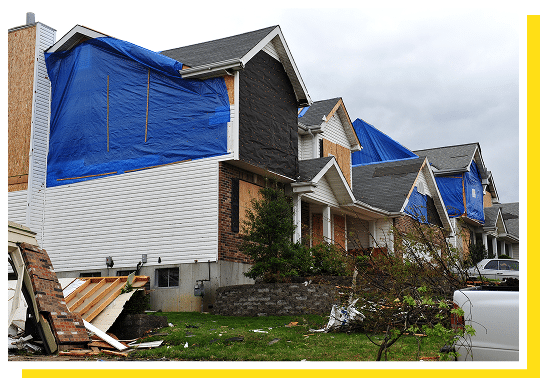
An emergency siding tarp is something you install when you want to avoid further damage but can’t get repairs done right away. It’s usually installed after bad weather conditions or vandalism.

An emergency siding tarp is also often required by homeowner’s insurance companies when you are filing a claim. If you think you need an emergency tarp after a storm or vandalism, odds are that your insurance company will cover the installation. An emergency siding tarp is not a long-term solution, but it will help save you money in the long run. You can install an emergency tarp yourself or have a professional install it. A professional like Storm Guard can also assess the damage at the same time, making the process more efficient. Learn how to install an emergency siding tarp and what to expect when you hire a professional.
FREQUENTLY ASKED QUESTIONS

The cost will depend on the material of your siding. Vinyl and aluminum cost an average of $5 per square foot, wood costs around $7 per square foot, and stone can cost between $12 and $24 per square foot.

Damage siding can be repaired with a patch kit, if there are just a few holes and cracks, or you can remove the damaged shingles and replace them.

You can—there are kits you can purchase for smaller repairs, or you can replace whole shingles.

To replace siding panels, you will want to purchase a zip tool. This will help you remove the damaged piece. Push the zip tool under the siding and hook it on the bottom lip. Slide it along the siding, then pull it down and out. Next, remove the nails. Finally, slide in the replacement piece and push it in until it locks into place. Nail it in.

Siding should be replaced every 15 to 40 years or when you notice major damage. If the siding is simply faded, you can paint over it.

SIDING STYLES & MATERIALS

Siding comes in a wide variety of designs, shapes, and styles. Choosing the one that is best for your property and climate can help ensure that your home or business will have long-lasting curb appeal.


Clapboard Siding
Clapboard siding is the type of siding you’re most likely to see on homes today. This siding is made of long, narrow boards that are installed horizontally across the exterior wall. It comes in a large range of colors and textures as well as insulated and non-insulated styles. Clapboard is a wood plank and typically costs between $5 and $8 per square foot. It is a sustainable product that can last for decades. However, the maintenance is higher since it's wood.

Clapboard Siding

Traditional Lap Siding

Traditional Lap Siding
Traditional lap siding is a subset of clapboard siding. Like clapboard siding, lap siding is also made of wood and nailed horizontally across the wall. The main difference between the two is that clapboard tends to be flat, with no shadow line showing, while lap siding will project a bit further out. The siding is layered one over the other starting from the top. Traditional lap siding is sustainable and has a long life. However, it has a higher maintenance need.

Dutch Lap Siding

Dutch Lap Siding
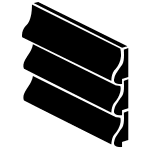
Dutch Lap siding is another one of the most popular home siding styles. It also has long horizontal planks. However, instead of being laid one over the other they have shallow valleys between each board. Dutch lap is more expensive because it requires more labor to install, so it’s at the higher end of the average clapboard siding in cost.

Wood Grain Siding

Wood Grain Siding
Wood grain siding is vinyl siding manufactured to look like it has a wood grain. It is very versatile and durable. For example, it can be installed both vertically and horizontally for a wide range of designs. Wood grain vinyl siding will typically last longer than wood siding and has an overall lower maintenance cost. Most vinyl siding will cost between $5 and $12 per square foot to install.

Beaded Seam Siding

Beaded Seam Siding
Beaded seam siding is another horizontal style of siding. This siding has a shadow line on the bottom of each panel. That line adds depth to the siding and makes it look like craftsmen hand cut the planks. It comes in many colors which makes it very versatile. Plus, beaded seam siding comes in vinyl, so it has a low maintenance cost.

Board And Batten Siding

Board And Batten Siding
Board and batten siding is also known as barn siding. It is the widest style of siding and can be installed both vertically and horizontally. When installed vertically, it can make a house or building seem taller. Board and batten siding also comes in a range of different materials, including wood, vinyl, and engineered wood. The type of material you choose will determine the final cost of installation.

Cedar Shake Siding

Cedar Shake Siding
Cedar shakes are made from sawn wood to create a less uniform covering. Cedar shakes add a more textured look and it comes in a variety of colors. Real cedar shakes come in a rich color, but they can go grey over time. You’ll need to add a fresh stain every few years to maintain their appearance, which adds to the maintenance cost. It can also be a bit more expensive, with the average cost of installation ranging between $8 and $13 per square foot.

Traditional Shake Siding

Traditional Shake Siding
Straight edge shingles are similar to cedar shakes except they are more uniform. This style of shake siding comes in multiple materials, which means the maintenance level and cost of installation will vary depending on what type of material is used.

Vinyl Siding

Vinyl Siding
Vinyl siding is one of the most popular options for siding because it is strong, durable, and comes in a wide range of colors and textures. It is also affordable, typically costing between $5 and $12 per square foot to install. Minor scratches don’t show and it is very low maintenance. Plus, vinyl siding is easy (and thus less expensive) to install. Vinyl siding comes in both insulated and non-insulated types, so it’s even possible to improve your home or building’s energy efficiency if you want. It is a good option for most climates, although extreme heat or cold can cause vinyl to crack or wear faster than in milder climates.

Metal Aluminum Siding

Metal Aluminum Siding
Metal or aluminum siding is another popular option for both homes and businesses due to the many benefits it offers. For example, aluminum siding can last up to 35 years without needing replacement, is very low maintenance, and insulates better than vinyl siding. Aluminum siding is also a great choice for properties in humid or coastal climates. Aluminum is waterproof, doesn’t rust, and unlike wood, won’t rot or grow mold. Because aluminum siding comes in a wide range of colors and styles, it is easy to get the look you want. Still, it’s one of the more affordable siding types, costing on average between $2 and $7 per square foot to install.

Stone Veneer Siding

Stone Veneer Siding
Stone veneer siding is made from a mixture of cement, sand, and aggregate, and then molded to look like stone. It’s most often used as an accent siding. Because it is a composite and not natural stone, stone veneer siding is typically less expensive and easier to install. It costs an average of $20 to $40 to install, much lower than natural stone although higher in price than other siding types. Stone veneer is also more lightweight, making it easier to use in creative designs, and is fire and insect resistant. Perhaps the biggest downside to stone veneer siding is that it does not insulate very well.

Wood Siding

Wood Siding
Wood siding is naturally beautiful, but that designer look does tend to come at a cost. Cedar shake siding, for example, can cost between $8 and $13 per square foot to install. But there are also higher maintenance costs to keep in mind. Wood siding is more susceptible to water and insect damage, making it a poor choice for humid climates. On the other hand, wood siding does have a long life span and it is biodegradable. It is also naturally insulating, making it a very energy-efficient choice.

Fiber Cement Siding

Fiber Cement Siding
Fiber cement siding is very stable and low maintenance. It’s a mix of wood pulp, clay, cement, and sand, and can be made to look like wood, stucco, or masonry. It’s resistant to changes in temperature and humidity, and is resistant to fire, termites and rot. It also does a great job of insulating homes and buildings, making it one of the best choices for improving energy efficiency. However, it is heavy and requires a special installation. It also costs a bit more to install, typically between $6 to $12 per square foot, and requires that all the old siding is removed.

Wood Siding

Wood Siding
Wood siding is naturally beautiful, but that designer look does tend to come at a cost. Cedar shake siding, for example, can cost between $8 and $13 per square foot to install. But there are also higher maintenance costs to keep in mind. Wood siding is more susceptible to water and insect damage, making it a poor choice for humid climates. On the other hand, wood siding does have a long life span and it is biodegradable. It is also naturally insulating, making it a very energy-efficient choice.

Fiber Cement Siding

Fiber Cement Siding
Fiber cement siding is very stable and low maintenance. It’s a mix of wood pulp, clay, cement, and sand, and can be made to look like wood, stucco, or masonry. It’s resistant to changes in temperature and humidity, and is resistant to fire, termites and rot. It also does a great job of insulating homes and buildings, making it one of the best choices for improving energy efficiency. However, it is heavy and requires a special installation. It also costs a bit more to install, typically between $6 to $12 per square foot, and requires that all the old siding is removed.
OUR REVIEWS

WHAT OUR CUSTOMERS SAY

CERTIFICATIONS & AFFILIATIONS

Quality roofing workmanship

Trusted Workmanship, Proven Over Time

Lasting quality is never an accident - it comes from knowledge, careful methods, and attention to detail. With over two decades of experience, Storm Guard applies proven practices and trusted materials to ensure every project endures.
  • No Shortcuts - Each installation is carried out with precision and care, reflecting standards that stand the test of time.
  • Materials that Matter - We rely on products selected for durability, performance, and long-term value.
  • Experienced Guidance - Our trained teams and project managers bring clarity and expertise to every step.
  • Tailored Solutions - Every roof is unique, and we adjust our approach to meet the specific needs of your home.
  • Respect for Your Home - We leave each site clean and cared for, as if it were our own.
THE STORM GUARD DIFFERENCE

EXPERIENCE YOU CAN TRUST

As America's top home exterior franchise, we've built our reputation by acting with integrity and providing the highest degree of professionalism.

LIMITED LIFETIME WARRANTY

We’re fanatic about customer satisfaction and provide the strongest materials, workmanship and labor warranties in the industry.
  • WE'RE LICENSED, INSURED, AND CERTIFIED
  • WE WARRANTY ALL LABOR &
    MATERIALS
  • SUPERIOR CRAFTSMANSHIP THAT'S GUARANTEED

WHY TRUST
STORM GUARD

HONESTY & INTEGRITY
  • We're honest to a Fault - We do the Right Thing.
  • We Follow Through & Honor Our Contracts.
  • No Scams. No Fraud. No Bad Workmanship.
  • We do it Right - Or We Don't Do It.
  • Honest Assessments Guaranteed.
REPUTATION & EXPERIENCE
  • 20+ Years Experience.
  • Consistent 5 Star Ratings & Reviews.
  • A+ BBB Rating.
  • Helpful, Knowledgeable Sales Team.
  • Expert Project Managers, Highly Trained Workers.
  • Rigorous Procedures w/ Proven Methodology.
  • Committed to Safety.
  • Personalized Customer Service.
HASSLE-FREE RESTORATION

EXPERT GUIDANCE. LASTING REPAIRS.

From minor fixes to major renovations, we help you understand the best options for your home and deliver solutions built to last.
© 2025 Storm Guard Franchise Systems LLC. All Rights Reserved.

Unless otherwise noted, each use of "Storm Guard," “us,” “we,” or “our” throughout Stormguardrc.com collectively refers to both the Storm Guard brand and the Storm Guard Franchise System, which is made up almost exclusively of independently owned and operated franchise locations.